
DEAL FLOW LAB
New here?
If you’d like context, begin with
Why Trust-First Monetization Exists
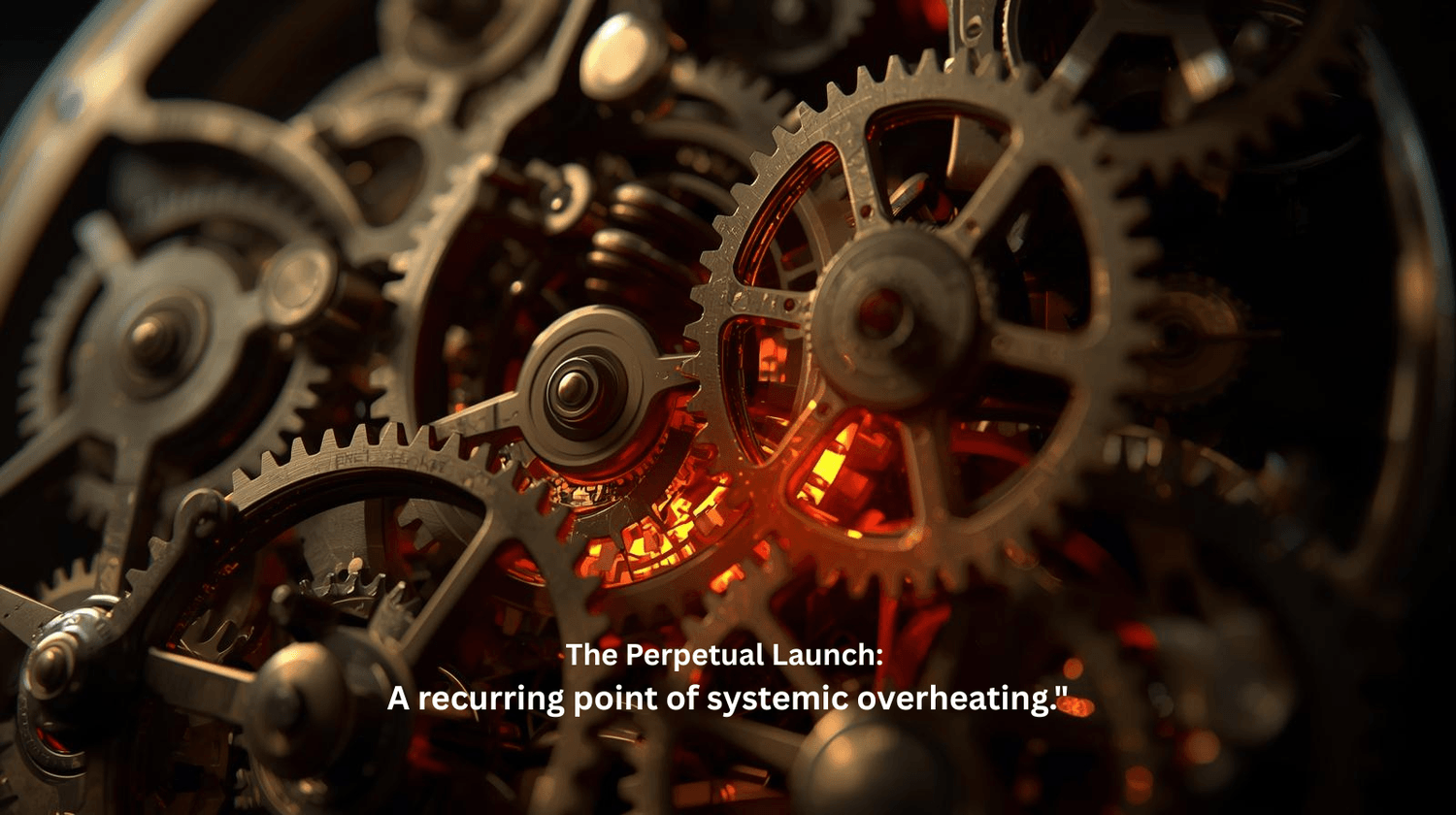
Anti-Pattern Note #2:
The Perpetual Launch
When Growth Becomes a Performance
This is the second entry in the Anti-Pattern Register.
The goal here is not to assign blame, but to trace the wiring.
Many of us have built using these patterns, inherited them from good teachers,
or felt their pressure as buyers.
By naming them clearly, we can see the structure they create—and choose,
consciously, to build a different one.
1. The Pattern:
The Perpetual Launch is a growth model where revenue is concentrated in short, intense periods of promotional energy.
It is characterized by a cyclical rhythm: build in silence, hype, open cart, countdown, close cart, fulfill, repeat.
The business's financial and emotional energy becomes tied to these peaks, with valleys in between.
2. The Short-Term Appeal (Why It's Initially Seductive):
It focuses attention.
It creates a clear event to market towards.
It leverages urgency (genuine or manufactured) to compress decision-making.
For a time, it can generate significant cash flow and a feeling of momentum.
It provides a script in a world of uncertainty.
3. The Long-Term Cost (The Structural Flaw):
For the Builder: It demands continuous performance.
It turns the creator into a recurring actor in their own sales drama, leading to burnout (The Exhaustion of the Pitch).
It makes long-term system-building secondary to short-term conversion tactics.For the Client: It trains the audience to wait for the "deal" or the "open door," devaluing the evergreen offer.
It associates your value with event-based scarcity, not structural substance.
Over time, the urgency loses potency, requiring ever-stronger doses of pressure.For the System: It creates a brittle architecture. Revenue is spikey, not stable. Trust becomes transactional, tied to the event, not embedded in the ongoing structure. The business cannot function silently.
4. The Alternative Principle (Pointing to the New Way):
The alternative is not "no launches," but a shift from performance-based events to structure-based availability.
A Trust-First system aims for monetization through continuous clarity.
The offer is always present, always explained by its Public Framework.
In a Trust-First structure, a 'launch' is merely a public note that the system is live and ready for use. It announces an evergreen reality, not a temporary opportunity.
Growth comes from the deepening of the framework and the widening of its understanding, not from the intensity of its promotion.
Closing Paragraph:
If you recognize your business in this pattern, see it as a signal of structure, not a mark of failure. Many of the best builders have operated this way.
The question is not "Was I wrong?" but "Does this structure sustain the energy and trust I need for the next decade?"
The Perpetual Launch is a pattern designed for attention-scarcity.
The Trust-First model is a structure designed for clarity in an age of informed choice.
The first step is simply to see the pattern clearly.
This is an entry in the Anti-Pattern Register, a diagnostic catalog of the old way's structural flaws.
CONTINUE THE EXPLORATION
— Choose your next direction:
→ The Philosophy
Foundational thinking behind the system.
→ The Anti-Pattern Register
What breaks systems — and how to avoid it.
→ The Lab Notes — Built in Public
Real-time experiments and open development.
→ The Architecture
How the system is structurally designed.
STAY ALIGNED
Get structured access to the Trust First System before public release.
Subscribers receive:
• Early access to the full framework
• Notification when new blog notes are published
• One structured reflection email per week
No promotional sequences.
Only thoughtful communication.
info@dealflow.com
Created with ©systeme.io