
DEAL FLOW LAB
THE TRUST-FIRST BLUEPRINT
From Selling to Diagnosing
A structural shift in how businesses operate.
See how a sales-call-free model is architected as a system.
You didn’t arrive here because you need another tactic.
You arrived because something in the current online sales model no longer feels sustainable.
The pressure.
The constant persuasion.
The sense that selling has become louder
but less meaningful.
What follows is not a pitch.
It’s an explanation.
You’ll see how a trust-first structure replaces
sales calls, pressure tactics, and constant convincing
—and why this approach aligns better with how people actually decide today.
Why Many Persuasion-Heavy Systems Create Friction

Many sales-driven models rely on high-pressure mechanics:
discovery calls as gatekeepers
urgency and scarcity cues
trust built through persuasion
Over time, these architectures tend to produce friction — for both the operator and the client.
In most cases, effort is not the limiting factor, but the way the system is structured.
The old playbook:
Teaches you to chase, convince, and close.
Trains your clients to be skeptical.
Introduces fatigue and structural limits.
When monetization no longer depends on closing intensity, revenue becomes less volatile.
How Trust-First Monetization Operates

The old traditional model assumes people must be convinced
before they decide.
This is why it relies on sales calls, objection handling, urgency,
and constant presence.
This system is built on a different assumption:
People move forward when the structure makes sense to them.
In Trust first Monetization:
Structured understanding replaces pitching as the driver of action
Qualification happens before purchase—through a built-in readiness protocol that clarifies what is required to operate the system, allowing clients to self-select their readiness.
Logic replaces urgency—decisions follow clarity, not pressure.
Trust in a system can emerge when its logic is visible and clearly understood
—reducing the need for persuasion-driven trust building.
Traditional Sales
"Let me convince you."
Pressure to decide now.
The seller has an agenda
Fear of missing out drives action
If they don’t buy now, they are lost
Speed is prioritized over understanding
Requires persuasion and closing skills
Relies on calls and direct interaction
Growth depends on constant campaigns
Trust First Monetization
“You decide based on clarity.”
Permission to walk away.
The system removes the need to persuade
Clarity determines the decision
If someone buys without clarity, they are not ready
Understanding drives long-term value
No sales skills required
Faceless execution — no calls
Evergreen structure — content compounds
This framework is designed around the second operational model.
Trust-First Monetization is not primarily built around short-term market tactics.
The framework is based on longer-term structural principles related to:
interpretability,
trust formation,
qualification clarity,
and operational coherence.
For Founders and System Builders
This system is not designed to be applied directly to existing models or niches.
Every viable niche operates on a specific underlying logic.
In many cases, that logic is neither explicitly defined nor structurally visible.
For this reason, it is recommended to operate within the Trust-First Monetization framework for a sustained period before attempting to design or restructure other systems.
Rather than studying isolated tactics, operators work inside a complete operational logic where:
trust formation,
qualification,
communication,
and structural coherence
are connected as part of one integrated system environment.
Over time, this can create a deeper understanding of how Trust-First architecture behaves across:
implementation,
communication,
and decision-making.
Attempting to transfer isolated parts without understanding the full structure often leads to fragmentation.
This reflects a broader Structural Integrity Principle:
A system built on structure cannot be transferred in fragments without losing coherence.
The System This Blueprint Describes
This is not a sales tactic or optimization guide.
It is an explanation of the system architecture that makes demand emerge from structure.
What the Public Blog Notes Introduce:
• The structural problems inside persuasion-heavy systems
• The philosophy behind Trust-First Monetization
• The operational architecture behind the framework
• The distinctions between persuasion-driven and clarity-driven qualification systems
What the Implementation Environment Includes:
The Trust-First Monetization™ - Shift E-Book: The complete, uncompromising methodology
The Done-For-You Business Engine: The Engine that provides prompt based ready to-import Content, for The blog, The social Media and Emails.
The White-Label Commercial Rights.
Allow you to sell the concept to your own clients,
including the Set-Up installation Platform with the final deep teaching and prompts etc.
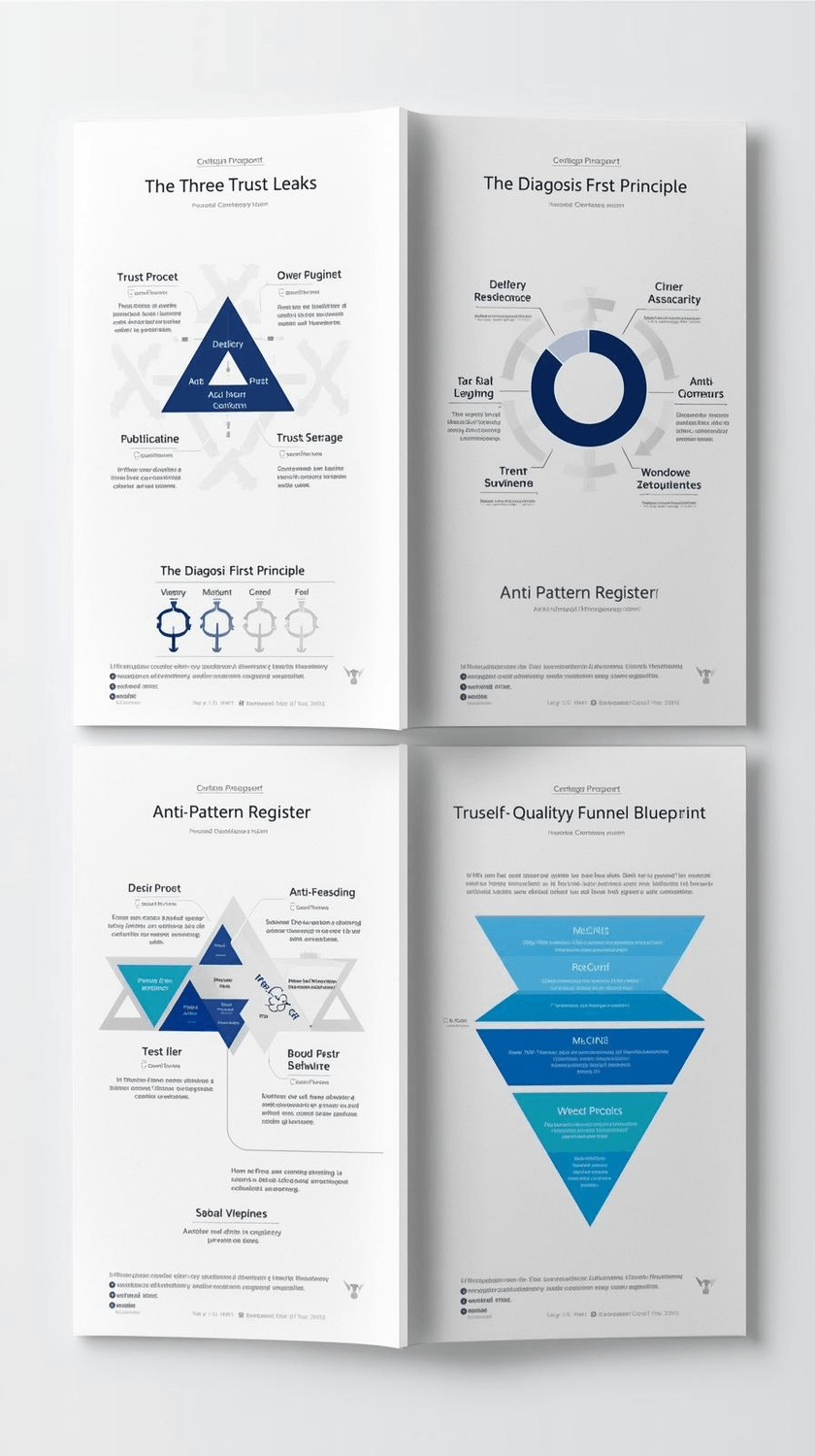
-When structure is in place, the system carries the sales work — not you.
Structure Before Personality
This system is designed to function without relying on personal identity, visibility, or influence. (Faceless)
The framework is designed to operate through:
structural clarity,
visible logic,
and interpretive understanding,
rather than relying primarily on personality-driven persuasion or constant visibility.
This allows the system to remain more stable independently of performance intensity or authority signaling.
Designed for Experienced Operators
Trust First Monetization™ is designed for high-ticket operators who
already generate revenue — but want monetization built on structural trust rather than closing pressure.
If your content is built to be understood rather than to persuade,
this system will also feel consistent with how you already think.
This system is designed for people who:
already create content to explain ideas, not just promote offers
want a ready-built structure instead of assembling funnels piece by piece
are tired of convincing people through calls
value clarity over pressure
want clients who decide — not comply
This system is not designed arround:
persuasion-heavy sales mechanics,
dependency-based client management,
or high-touch manual carrying structures.
Why the Operational Dynamics Change
When sales pressure is removed, resistance drops.
When structure is clear, explanation becomes unnecessary.
Trust isn’t created by saying more
—it’s created by making sense.
This is the tone shift this concept embodies
—and what it teaches.
This isn’t about effort or mindset.
It’s about alignment.
This Is Not Just Content Training
You will return to the same frameworks repeatedly:
Categories.
Angles.
Doctrine.
Publishing rhythm.
Over time, this repetition builds cognitive stability.
The implementation becomes the learning.
You are not memorizing principles.
You are operating inside them.
That is intentional.
This Architecture includes "Structural Learning Through Implementation.
What Exists Before You Enter
This is a fixed system structure, built and maintained as a complete unit.
It includes:
A complete funnel architecture
— two fully implemented funnels, delivered as integrated systems rather than page templates:
• a Lead Page funnel with email capture and confirmation logic
• a Sales and Payment funnel, activated when release conditions are met
A transferable system instance
— applied into your own Systeme.io account, or your chosen platform, preserving structure and logic
The blog includes:
empty visual placeholders to be adapted to your brand
guided text prompts for your foundational Blog Pages
ready prompts for a foundational Blog Note in all 5 categories, designed to establish clarity and orientation
Content Engine: topic guidance and prompts for continued content publishing, once the system is built.
Defined system logic
— documentation explaining why each component exists
— how trust, diagnosis, and readiness are produced through structure
— what each element replaces in traditional sales models
— guidance on what must remain intact for the system to function
— The Trust-First Monetization™ Shift E-Book: the philosophical and structural rationale behind the systemDesign adaptation points
— a neutral, non-branded visual structure
— prepared placeholders for logos, colors, and typography
— clear guidance on where and how to apply your own brand identityOptional niche-adaptive prompts
— provided to support contextual clarity when applying the system
— including prompts for blog content, Emails and social publishing
The system exists in full prior to use.
Access does not depend on persuasion, effort, or modification.
Implementation access occurs once the structure is understood and the Operator Readiness Protocol is approved.

Strategic Planning
A defined structure that replaces improvisation.
Decisions are guided by clarity, not pressure or guesswork.
Conceptual Guidance
Clear thinking behind every component,
so you understand how the system
works as a whole
—not just how to operate it.
Scalable Clarity
A structure designed to adapt
for this niche — without increasing complexity or effort.
Trust First Monetization™ — Operator Readiness Protocol
A diagnostic to assess your readiness to become a trust-first operator.
Before considering operating this system, every candidate should pass the Operator Readiness Protocol.
A link to the final overview and access page is provided at the end of the Protocol.
Release Notification & Early Access
STAY ALIGNED
Subscribers receive:
• First opportunity email, to access the full framework license upon release
• Notification when new blog notes are published
• One structured reflection email per week, for deeper learning
STAY ALIGNED
→ JOIN THE REFLECTION & RELEASE LIST
| © 2026 Dealflow Lab. |
info@dealflowlab.com
Created with ©systeme.io